
The Winner: All Quiet on the Western Front
Other Nominees: The Big House, Disraeli, The Divorcee, The Love Parade
The Winner: All Quiet on the Western Front
Other Nominees: The Big House, Disraeli, The Divorcee, The Love Parade
The Love Parade is a charming musical presentation of the consequences of a reversal of gender roles. It seems to ask, what if men were the powerless ones in relationships? Until the ending, it makes some good points about what might happen if partners were truly equals rather than having an imbalance in importance or power or authority. The ending cheats the audience a bit because it seems so retrograde in its implications, but until that point, we’re given some opportunities for moments of reflection.
Maurice Chevalier plays Count Alfred Renard, a military attaché to the ambassador to France from the country of Sylvania (no relation to the television set, apparently). While in Paris, he’s had numerous affairs, including one with the ambassador’s wife. He’s sent back to his home country to face the queen for punishment. By the way, even his servant (played by the delightful Lupino Lane) and the dog had flings with numerous partners. All of this is related through the song “Paris, Stay the Same,” suggesting that the French city is perhaps more open-minded than Sylvania. Everyone, save the ambassador, seems to have had a good time.
Jeanette McDonald, in her first major film role, plays Queen Louise of Sylvania, and she gets a nude bathing scene that’s quite shocking considering the image of most of her late films. She comes across as so prim and proper in her career that it’s a surprise to see her starting this film with such a sequence. Everyone in the government and, really, in the country wants her to marry someone, but she’s not interested in any of the options that are presented to her. When Renard shows up, she gets intrigued by reading the report about his escapades. It must be pretty racy stuff, after all.
She must punish him, of course, but cannot think of a suitable way to do so. He vetoes her plan to make him grow a beard, certainly an odd way to show your displeasure with someone. When he suggests instead that he be forced to remain at her side, she seems quite happy even though she wonders aloud if that’s truly a punishment. The song “Anything to Please the Queen” (which sounds like the title of a great anthem for a drag performer) accompanies this sequence, and it’s a rather charming romantic number.
Everyone in the queendom, it seems, watches the Queen and the Count’s first dinner together. In fact, this is the most voyeuristic country in history. Almost everyone seems to be either watching the two through the windows or gossiping about what they’ve seen or heard from others. The Queen and the Count do seem to have immediate chemistry, and why not? It is a romantic comedy musical after all, and it was the first sound film directed by Ernst Lubistch, who had such a wonderfully light style for these kinds of films.
They get married quickly, and the count becomes the prince consort. Unfortunately, that means he has no power because he’s not the king and most definitely not her equal in decision making. He realizes this when the wedding vows are all about her. He has to obey her, for example, no sharing of that aspect of marriage. The phrase “I now pronounce you wife and man” is a clear and clever reversal of how it is commonly phrased. The wedding night is continually interrupted by cannon fire, which is quite suggestive for a film so early in the sound era. He cannot stop the noise so that he can concentrate upon lovemaking, though, because he has no power or authority, and besides, the Queen has asked for it. I suppose even she appreciates a good metaphor.
Each day she gets to go out and do queenly tasks, like inspecting the grenadiers, and he only has activities like tennis and bridge. He even has to wait for her to eat breakfast, so he feels like he is not useful to anyone. The song “Nobody’s Using It Now” suggests just how useless he feels, and exactly what “it” is makes for quite a naughty song. He tries to be helpful, even creating a budget for the country that would be self-supporting rather than depending upon a loan from other countries, but because he is the prince consort, it’s rejected. He tells her that he’s going back to Paris on the night she’s supposed to attend the opera because he serves no purpose in Sylvania. They fight because their appearance together has implications for the country’s success at raising money and for its reputation among other nations. He shows up after all, of course, because this is romance, and he gets a standing ovation from the audience. Why they applaud him so vigorously is a source of confusion. What exactly has he done to deserve such a response? Why is he so much more popular than the Queen? Does everyone really know what’s been going on in their private chambers?
When they return to the palace after the opera, he makes her beg him to stay. They discuss a suitable punishment for her, and what do you know? She has to stay by his side the way he stood by hers. This is the second Oscar nominee from this year that starts with an interesting premise about women’s equality but ends with the men resuming control over a relationship. It must have been very tough to be a feminist in this era.
There’s a cute subplot involving his loyal servant (Lane) and one of the queen’s maids (played by Lillian Roth). They have a comic number entitled “Let’s Be Common” that verges on slapstick or burlesque. It’s very physically demanding, and they are both more than able comic actors. That moment is perhaps only topped by “The Queen Is Always Right,” which involves numerous supporting cast members in a debate over the nation’s future, but Roth and Lane are the highlights of that number as well.
The filmmakers don’t translate the occasional use of French in the dialog. There’s even a joke about it. Chevalier asks someone if they know French, and when he replies no, Chevalier clearly says something quite derogatory. Later, when another person replies yes, Chevalier simply shrugs and says, that’s too bad.
Here’s a bit of Oscar trivia for you: The Love Parade was the first film to be nominated for six Academy Awards, but it lost all of them. As I’ve noted earlier, it was MacDonald’s first feature film in a leading role and Lubitsch’s first sound film. As slight an entertainment as this appears to be to a viewer nowadays, it certainly has a place in Oscar history.
Oscar Nominations: Best Picture, Best Director
(Lubitsch), Best Actor (Chevalier), Best Cinematography, Best Art Direction,
and Best Sound Recording
The Divorcee is an intriguing Pre-Code examination of double standards. A married couple break up not because the husband cheats on his wife, which he does first, but because she later cheats on him and he cannot accept her infidelity. The script makes a rather impassioned plea for fairness in the ways that the different genders are treated when it comes to these kinds of behaviors, but the story fails women, in particular, with its rather retrograde ending.
We first meet Jerry (Norma Shearer) and Ted (Chester Morris) with their group of wealthy friends at some sort of cabin retreat. They get engaged during this trip, but their friend Paul (Conrad Nagel) gets jealous because he’s in love with Jerry himself. He gets drunk and then has a horrible car accident that leaves another one of their friends, Dorothy (Helen Johnson), disfigured. Out of guilt, Paul marries Dorothy in her hospital room while intercutting scenes show us Jerry and Ted’s wedding. You might think that Jerry and Paul will later have an affair, but you’re already off base. That would be too simple.
On the day of their third anniversary, Jerry and Ted seem very happy together, but when their friends show up with a woman named Janice (Mary Doran), Ted gets very uncomfortable. He’s leaving for Chicago the same day for business, but Jerry quickly realizes that he’s upset because he was unfaithful with Janice. He tells Jerry all the usual lies: he was drunk, it wasn’t planned, it doesn’t mean anything, blah blah blah. She’s angry and disappointed with him, and he leaves for a week.
Ted does try to get in touch with her to apologize, but she manages to avoid or ignore his attempts. Their friend Don (Robert Montgomery) takes her home, and he’s a little bit drunk like Ted was with Janice. Don takes her to a club where she’s clearly thinking about what she’s going to do with Don later on. There’s a very determined look on her face. Initially, she’s tearful over her own fidelity, but she gets angry quickly when Don asks her not to tell Ted. How does she tell her husband? “I’ve balanced our accounts. That’s all.” That certainly seems like one of the coldest announcements possible, and he winds up angrier over her infidelity than she did over his own infidelity. It’s quite a double standard, and she points it out to him directly.
One of the wildest scenes follows. Ted shows up drunk at a friend’s wedding, demolishes the cake, and punches a man that he thinks might have been the one she slept with (he’s wrong, of course). He then goes home to pack so that he can leave her. Morris is particularly good in this sequence, and he’s especially strong when Jerry is pleading for forgiveness out of a sense of fairness. He cannot see that what she did is no worse (or better) than what he did, and she witheringly condemns his male pride.
After they divorce, Jerry dates a series of men in a brilliantly edited sequence that only shows pairs of hands (one male, one female) in the shots. The dialog establishes that she’s seeing men from a wide range of nationalities based upon the accents. She’s also acquiring quite a bit of jewelry, it appears. Her hair has gotten looser, curlier than before, suggesting the freedom that she now feels, and she claims to be having a good time even if she admits that none of these relationships are serious.
You remember the unfortunate Paul from earlier, yes? Well, Jerry and Paul meet on a train, and he tells her that he still loves her. She breaks down at his admission and admits that she’s very tired of all these so-called good times. His marriage to Dorothy has been an unhappy one for them both, and he wants to divorce his wife and marry Jerry. He’s got a new job in Japan, so it could be a fresh beginning for them both. She accepts his proposal only to be confronted by Dorothy, who comes to see Jerry and finds Paul there. She tells Paul that she wants to stay married because he’s all she has at this point. This scene is a bit tough to watch because the actress playing Dorothy is wearing a very dark veil to cover her disfigured face. How could she even tell who she’s talking to? Can she see through all that black fabric?
Jerry decides that she wants to reunite with Ted. Remember what I said about the movie’s ending unraveling its premise that women might have as much right to have an affair as men do? Of course, everyone who does so must still be punished, and this was before the Production Code went into effect. She moves to London for a new job and keeps going out in Paris with the hopes of finding Ted. They do meet again, and the film provides its happy Hollywood ending for two people who have, I suppose, both realized that they’ve each done the other wrong. It still seems rather unrealistic given all that’s happened.
Shearer was chosen as the Best Actress for her performance, it’s quite easy to see why. She does get to show a wide range of emotional responses, and her face is very expressive about what’s happening to her. She doesn’t need dialog all the time; she can convey emotions very directly. I know that the Academy had not yet started awarding Best Supporting Actress yet, but if they had, I’d fully expect that Zelda Sears as Hannah, the maid who remains loyal to Jerry through the film, would have been nominated. She’s great comic relief and knows how to deliver her lines with a lot of zing. When she tells Jerry at one point that she has a date with the butcher, Jerry asks if he has “honorable intentions.” Hannah’s reply: “I’m afraid they are. He just wants to keep a good customer.” It’s nice to have these moments of fun.
Oscar Win: Best Actress (Norma Shearer)
Other Oscar Nominations: Best Picture, Best Director
(Robert Z. Leonard), and Best Writing

The Case of Sergeant Grischa, another lost film, stars Chester Morris and Betty Compson, both of whom had been nominated for acting Oscars the year before. It was apparently not a financially successful film upon its release, but it was remembered by Academy voters for its use of sound. It is apparently the only sound film to be nominated for an Oscar that was later completely lost. The plot, according to IMDB, goes like this: “Sergeant Grischa Paprotkin, a simple-minded Russian soldier, escapes from a German prisoner-of-war camp. He hides out for a while with a peasant girl named Babka, but finally his longing for his homeland overcomes him. Wearing the identity of a dead Russian spy, he is soon recaptured by the Germans and sentenced to death. The German ruthlessness and disdain for justice is driven home when proof of his innocence of being the spy is brushed aside.” They sure could come up with some wild plot twists back then, couldn’t they? Much like All Quiet on the Western Front, released the same year, The Case of Sergeant Grischa was based upon a novel by a German author and was set during World War I. No copies of the film are known to exist, a sad fate shared by many earlier films.
Oscar Nomination: Best Sound Recording

Song of the Flame is a lost film from the early years of the Academy Awards; at least, it’s believed to be lost. At this point, only the audio track remains, preserving all of the songs from the film. You can actually listen to reels 1, 4, 5, 7, and 9 on YouTube, but who wants to merely listen to a movie that also features visuals? According to IMDB, the film is based upon a 1925 operetta with music by Oscar Hammerstein II, Otto Harbach, Herbert Stothart, and George Gershwin. It's the story of “a peasant who is known as ‘The Flame,’ who leads a revolution in Russia. This peasant, who is in love with a Russian prince, saves his [the prince’s] life by agreeing to sacrifice her virginity to an evil fellow-conspirator.” Heavens, that sounds enticing, doesn’t it? It stars Bernice Claire as the peasant and Alexander Gray as the prince. Noah Beery and Alice Gentle star in key supporting roles. Beery is the only one that I’d heard of, but to be fair, Gentle was better known as an opera singer, and Claire and Gray starred in a series of operetta films together, sort of predecessors to Jeanette MacDonald and Nelson Eddy. Song of the Flame was their last film together, but I’ve not seen either of the other two. It was also one of the first musical films to be filmed completely in Technicolor, and it has a sequence shot in a widescreen process called Vitascope, the first color film to include widescreen. The film is also historically significant due it being released with the first Looney Tunes animated short, Sinkin’ in the Bathtub.
Oscar Nomination: Best Sound Recording

Watching All Quiet on the Western Front always brings to mind a key point in the debate over war films: Do they glorify war by making battles seem exciting or are they inherently anti-war because they show the destruction caused by war? On one side of this debate is, allegedly, French director Francois Truffaut, who said that there was no such thing as an anti-war movie. On the other side is American director Steven Spielberg, who said that all war movies are anti-war. Perhaps they’re both correct to a degree, but it’s tough not to see All Quiet on the Western Front as a film demonstrating the futility of war and the price it exacts in the lives of the young, in particular.
Set during World War I, the film begins with a group of young German men who are incited by their teacher (professor?) to join a new company that is forming. Conveniently, a troop of soldiers marches by the open windows of their classroom just as the teacher is pushing them with talk of “protecting the fatherland”—words that should be chilling to those of us who have the perspective of history on our side. In an innovative use of technology, several of the boys are shown imagining themselves as soldiers or heroes or perhaps victims of war, and the close-ups of each daydreamer is spectacular. The editing in the film is really first-rate, and it’s a shame that there wasn’t yet an Oscar category for film editing.
Of course, all the young men (are they truly boys?) join the military, and their “leader” is Paul Baumer (played by a very youthful Lew Ayres, later of Dr. Kildare fame). They know their drill sergeant, Himmelstoss (an unctuous John Wray), but he is no longer the friendly neighborhood mailman. No, he’s now a brutal and vindictive task master, and he makes their training painful and exhausting. They talk a lot in the barracks about how much they resent him, usually while mostly or partially unclothed (a recurring motif that highlights the healthy bodies of the young actors), and they manage to get their revenge on the night before they are supposed to go into battle. He’s prevented them from enjoying a single night of promised leave by making them march through mud, seemingly his favorite pastime, and forcing them to clear their uniforms before leaving for the front.
The film doesn’t spare us the brutality of war. It’s only about twenty minutes into the film before the first of the young men is killed. It’s a scary moment for these soldiers who probably thought they would never be the ones being shot or bombed, but the constant gunfire and explosions frighten them when they first arrive at the battlefield. With such inexperienced soldiers, you know there’s going to be a rather grizzled veteran, and he’s Corporal Stanislaus “Kat” Katczinsky, played here with great humor and generosity by Louis Wolheim. He thinks they’re not ready for battle—he’s right, naturally—but he befriends Paul and the rest by showing them how to survive.
The film features a lot of battle sequences, and they are presented with a lot of kinetic energy: soldiers running everywhere, explosions all around them, people falling into foxholes, others barricading themselves in trenches only to have the “enemy” jump into those same trenches. One of the most harrowing sequences occurs when Ayres’ Paul falls into a foxhole only to be followed by a French soldier, whom he stabs with his knife. However, the wounded man then takes a long time to die from his injury, and Paul winds up trying to save him by giving him water. Eventually, he even apologizes to the Frenchman and asks for forgiveness; he also vows to provide for the dead man’s wife and daughter. It’s one of the moments that clearly means to suggest that all of this death—and there’s a lot of death in this film—is really unnecessary.
If you need further evidence that the film’s makers are attempting to present a case against war, at least a couple of times during the film, the soldiers themselves discuss the purposes of war. They cannot see what goal is being served by killing other men. They assume that someone in one country offended someone in another country, but they aren’t feeling offended themselves. Since they’re German soldiers, they also ponder what exactly the Kaiser gets from having the country be at war. They don’t want to kill other people, and they don’t fathom why someone wants them to kill others and destroy property. Yes, I realize that there are some comic undertones to a few of the points they make, but the overall subject is quite serious, and they raise several valid and intriguing points that are still relevant today.
If you really want another poignant example from the film that shows the irony of war, consider the case of Franz, one of Paul’s classmates and fellow soldiers. He’s come to battle with a very expensive pair of leather boots, an object of envy for most of his classmates who must march is much cheaper, lower quality boots. He’s injured in battle and has one of his legs amputated. Paul gives the boots to another young soldier, Mueller, who is injured not long after he acquires the footwear. A closeup of his legs clad in the boots is the last image that we have of him.
Late in the film, after Paul recuperates from an injury, he’s allowed leave to visit his family. His mother and sister greet him with great joy, but they can’t fully comprehend what he’s endured, and he doesn’t feel comfortable telling them about the horrors he’s experienced and witnessed. A group of older men, including his father, debate what should be happening in the war and where the troops should be engaged in battle, but it’s very clear that they have no idea what’s really happening. Paul becomes so disillusioned that he returns to the frontlines earlier than expected. When he meets his company again, none of his classmates are still alive, and many of the newer soldiers are just teenagers. Only Tjaden (played with great humor by Slim Summerville) and Kat are still around… but not for long. That’s not a spoiler alert since the film was released almost a hundred years ago.
I’d like to point out two technical elements of the film that really stand out. Even though the dialog was rather, um, quiet or low in the print that I saw, the sound effects were very effective. Paired with the visual effects, they really put the audience into the realm of battle. Bombs and bullets abound in this film, and you get a clear sense of the constant danger that soldiers face. The other technical achievement worthy of note is the film’s cinematography, which was nominated for an Academy Award. It’s quite stunning, and the final sequence of Paul reaching for a butterfly during a fight is just magnificently shot. I also enjoyed the way that the camera sometimes moves through the trenches, showing the faces of the soldiers about to shoot at their fellow humans on the other side. There’s fear and strength and determination and exhaustion there.
The final image of the film—before a very long fade to black—is a superimposition of a cemetery filled with rows upon rows of white crosses and the young men from the beginning of the film as they were when they first marched off to war. We’ve all seen those cemeteries, and it’s haunting to know that it seems those soldiers were destined to rest in one of those locations, probably far from their home countries. If you still haven’t decided whether this is an anti-war film by that point, you should leave with a very strong, clear sense after watching that unfold on screen.
The film is based upon the 1929 novel by German veteran Erich Maria Remarque, and it shares the book’s emphasis on the repeated acts of trauma experienced by the soldiers. At times, they have no food to eat. We even get a scene where eighty soldiers show up, but there’s enough food for 150 men because that’s what the cook expected. However, he doesn’t want to give them double portions because that goes against the rules. Many veterans have what we now call post-traumatic stress disorder (PTSD), and you get a very clear picture of that trauma and stress in this movie. It’s worth noting that Remarque’s novel and the film adaptation of it are primarily focused upon the German side of World War I, but it doesn’t take much imagination to see how the other side was having many of the same experiences. I don’t think it’s problematic to note that almost everyone suffers during wars, not just one side.
All Quiet on the Western Front was recut several times for rereleases over the years, so the version/s that we have today might not be exactly what audiences initially saw in 1930. It’s actually about twenty minutes shorter than the first version. The director, Lewis Milestone, was the first person to win two Oscars, having received a directing award two years earlier for helming the comedy film Two Arabian Knights, which also starred Wolheim. Another interesting Oscar history note is this was the first film to be named Best Picture (or “Outstanding Production”) and have its director be chosen for Best Director, a trend that would be quite common over the years.
Oscar Wins: Outstanding Production and Best Director (Lewis Milestone)
Other Nominations: Best Writing and Best Cinematography
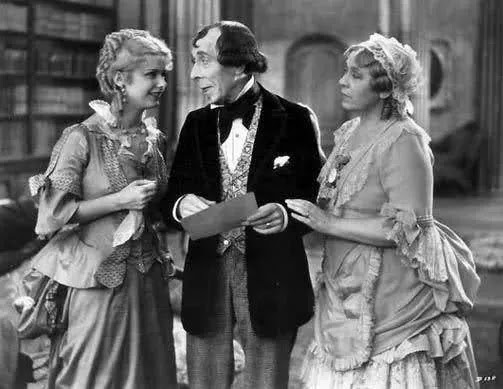
The film Disraeli depicts a key moment during the reign of Queen Victoria and Prime Minister Benjamin Disraeli. It has something to do with the purchase of the Suez Canal and ensuring British control of India in 1874. There are also Russian spies who are trying to find out what Disraeli and his government are doing, but to be frank, I’m not sure that any of this is all that interesting to a current audience. The film’s origins as a stage play are too obvious, and the quality of the print that I had access to was quite bad.
Today, Disraeli is perhaps best known for starring George Arliss, who became the first Best Actor Oscar winner to portray an actual person and the first British actor to win the honor. Since then, of course, neither of those is rare. Oscar voters have shown their preference for actors portraying real-life people, and British actors have certainly accumulated quite a lot of Oscar gold over the following decades. The rest of the cast of Disraeli is, comparatively, a bit amateurish, including Arliss’s own wife, Florence Arliss, playing Lady Beaconsfield, Disraeli’s wife. Oddly enough, she seems to be calling him Dizzy throughout the movie, or is she trying to say Dissy? I could never figure that out.
At the start of the film, Disraeli is already old and quite controversial. He’s denounced – to his face – by fellow politicians in the House of Commons and regularly spoken of in unfavorable terms in Hyde Park. He also has to deal with those Russian spies, one of whom he hires to be his personal secretary in order to keep tabs on the fellow and the other a very nosy woman who has access to the gossip of high society types. Disraeli pretends to be ill in order to get Mrs. Travers (Doris Lloyd) to reveal what she knows, and he’s able to turn the information around on her. That sequence might be the most entertaining in the entire film.
I don’t recall from my British history classes all of the fuss that the film makes about the Suez Canal’s importance to Great Britain and its empirical tendencies. It’s dismissed by one of the characters as being nothing more than an “Egyptian ditch.” Nowadays we understand the significance of such canals, but I’m not sure I ever fully understood from the film how securing the canal would give control of India to Great Britain and make Victoria the “Empress of India,” which seems to be Disraeli’s goal. Certainly, British expansionism was a key aspect of this period in their history, so the film is rather accurate in that respect, I suppose.
There’s a subplot involving Lord Charles Deeford (Anthony Bushell), a young and handsome and dull fellow, trying to woo Lady Clarissa Pevensey (Joan Bennett), who finds him just as boring as the viewers do. He’s certainly handsome, but he only becomes truly interesting when Disraeli dispatches him to help negotiate for British control of the canal. When he’s gone from the screen, she and we get a chance to forget how stuffy he is. His return, at least, guarantees success for Britain and a sense of how he might actually be smarter and more energetic and even useful than he initially appears.
I’m surprised – even though I probably shouldn’t be given when the film was made – that more wasn’t made of Disraeli’s Jewishness. Yes, the “old money” class of Britain certainly didn’t look favorably on him because he wasn’t “one of them,” but how much of their dislike of him might be attributed to antisemitism? The movie only mentions his Jewish identity a couple of times, and once is in connection to a Jewish banker who supposedly will help Disraeli secure the money to pay for the canal. Otherwise, the film remains rather silent on how the reactions to Disraeli might have been motivated by the feelings of British aristocracy to his ethnicity.
Like many stage productions that were adapted into films in the early years of “talkies,” Disraeli is really, truly quite talky (talkie?). Dialog takes clear priority over action, and the sets too often reveal the stage origins of the film. When you don’t have to change the sets as often, you could provide more furniture, for example, to represent better what Victorian homes and offices looked like. I mean, they weren’t known for this kind of rather comparatively austere minimalism.
The version of the film that I saw had a very hazy quality to its cinematography that I can’t quite determine where it was the result of deterioration or just how it was almost filmed originally. It almost looks out of focus at times. Some of the outdoor sequences are quite nice, but I didn’t understand the camera’s obsession with the swans and peacocks that populate the Disraeli home. The DVD (probably a bootleg copy) I watched was actually recorded from a Turner Classic Movies screening, so I’m wondering if we just don’t have access to a good print nowadays.
I’ve often said that you shouldn’t rely on a movie to provide historical accuracy. If you want what really happened, a book or a documentary might be more helpful than a fiction film. However, after watching Disraeli, I was left wondering if the actual events were truly this boring. If you need evidence that this is a fictional story, look at the Hollywood ending the film gives you. Disraeli’s wife is suddenly sick even though I don’t recall any sense that she’d been all that frail throughout the rest of the movie, but she makes an astonishing recovery just in time to join her husband to meet Queen Victoria at the film’s end.
Oscar Win: Best Actor (George Arliss)
Other Oscar Nominations: Best Picture and Best
Writing

The Big House is an early movie about life in prison. It was written by Frances Marion, the first woman to win an Oscar for a screenplay—for this film, actually. She would repeat as a winner the next year with the movie The Champ. Interestingly, both films star Wallace Beery, one of the quintessential tough guys of the early sound years in film. Marion and Beery seem to have been a good match professionally, making several films together over the years. And how intriguing that a woman won back-to-back Oscars writing two films about tough guys in prison and in boxing, respectively; I wonder if a studio nowadays would even contemplate a script about such men that was written by a woman. Nevertheless, The Big House is especially noteworthy viewing today for the ways it has obviously influenced almost every prison movie that has followed it.
Kent Marlowe (Robert Montgomery in an early leading role for him) has been sentenced to ten years in prison for killing another man while driving drunk. The opening scenes show us the process of admitting a prisoner: he has his picture taken with his prisoner number, gets fingerprinted, and changes from a suit and tie into prison garb. He also learns that he will be placed into a cell with a couple of hardened criminals, “Machine Gun” Butch (played by Beery) and Morgan (played by Chester Morris). One of the guards warns the warden (played by the ubiquitous Lewis Stone) about the influence such men could have on one so young as Marlowe, but the warden replies with a speech about overcrowding in prison. That should be your first hint that trouble awaits both Marlowe and the rest of the prisoners as well.
Butch is serving time for murder; he killed his girlfriend Sadie, among others. That he now regrets poisoning his girlfriend does not necessarily mean he wouldn't do it again, for the record. Morgan is in prison for robbery, and he too has apparently been guilty of more than one offense. Each one of them tries to be the boss of the cell, with a dispute over Marlowe's cigarettes giving Morgan an early edge. Butch is rather proficient at stealing other people's stuff, so Morgan has to chastise him on several occasions. They are, of course, friends beneath all of the bluster, but when in prison, you apparently have to act like a tough guy in order to survive.
We get what are now typical scenes in prison movies. The prisoners have to march in step as they walk out of their cells to the prison yard for exercise. They have to be lined up for meals in the mess hall. There's a near-riot in the mess hall over the quality of the food. Prisoners are sent to the "dungeon" (solitary confinement) when they misbehave. There are scenes involving the planning of a prison break, and there's even an escape using that always under-supervised area of a prison, the hospital ward. You'll witness all of these kinds of scenes in later movies set in prisons; they are so expected at this point to almost be clichés (if they haven't already achieved that status).
You're probably wondering about the issue of sexual behavior in prison. Today, such a topic would be and frequently is handled directly and perhaps graphically. However, aside from one couple among the prisoners who have their arms around each other's shoulders, I couldn't detect any homosexual or homoerotic behavior. Well, maybe the climactic scene with Butch and Morgan where they forgive each other has elements of the homosocial (to use Eve Kosofsky Sedgwick's term), but that's the extent of it onscreen in The Big House.
There is, however, a woman in all of this, and it's Marlowe's sister. On the young man's first night in jail, Butch and Morgan see her picture and are immediately smitten. Morgan later sees Anne Marlowe (Leila Hyams) on visiting day, and when he escapes from jail, he goes in search of her, ostensibly to enact revenge for what he thinks is Marlowe's double-cross involving a planted knife. Instead, he falls in love with her, a rather unexpected turn of events, particularly since she knows that he is an escaped convict. Her brother has even written her to warn her about Morgan, yet she still dates him until the police show up at her parents' house to arrest him—on the very day he was leaving for the Pacific islands, no less. I guess it's understandable given how handsome Morris was. When a guy who looks like him says, "Gee, you're a peach of a girl," how could anyone resist?
The key sequence in the film is the attempted prison break, and it’s the focus of much of the last quarter of the movie. Butch and the members of his gang, including a rather unwilling Marlowe, plan to use a daily ritual involving a bouquet of flowers passed through the front gate as a means of escape. They are somewhat successful, making it to the storeroom where the weapons like Tommy guns are kept. However, the guards and the warden are quick to respond, and it isn't long before there's a lengthy shoot-out that leaves many dead and wounded on both sides. Butch wants to get revenge on Morgan because he thinks the returning prisoner has ratted him out, not realizing that Marlowe is truly responsible for the guards knowing about the plans for a break-out. Marlowe has a nervous breakdown, starts screaming, and gets shot. Butch and Morgan shoot each other, but Morgan survives to be proclaimed a hero for saving some of the guards who had been taken hostage. He is released early and reunited with Anne.
I know filmic technique isn't really the key to a movie's success most of the time, but when I watch some of these older films, I marvel at how they were inventing film language before our eyes. The Big House uses what has now become a cliche to mark time: the passing of months on the calendar. It's interesting to see what would have still been a fresh idea in 1930 but which has now become so overused as to render it almost laughable. I also particularly admired the use of a dissolve in the mess hall. First, we see the utensils on the table. Then the full hall comes into view; it's empty, just rows and rows of tables. Slowly, the dissolve brings the prisoners into view, and we watch as they are given their food. It's a stunning visual sequence.
If the dissolve isn't the most used technique in this film, then it would probably have to be the pan. Several times, we watch as the camera moves down a row of prisoners. For example, we see it in the mess hall as one after another prisoner is unable to eat the food placed before him. We see it under the table when Butch tries to get rid of a knife by passing it along to the other prisoners. We also see it in the chapel on Thanksgiving Day as we see the faces of the prisoners singing a most ironic choice of song, something about "opening the gates." That's followed by another pan of Butch and the other prisoners passing guns and bullets to each other for the big prison break. We don't even notice the use of these methods nowadays, I suspect, but that's because the editing today is much more seamless much of the time.
I know I shouldn't have been distracted by this, too, but the look of the prison is spectacular. This being a Metro-Goldwyn-Mayer production, the art direction and set decoration are impeccable. The building appears to be one of those art deco masterpieces with long angles reaching to the sky. It's pretty amazing to consider that this is a prison and not the headquarters for some multinational corporation. That's how they did it those days at MGM. Everything had to look good, even a prison.
All of the actors are good in this film. Beery was a solid actor, capable of gruffness and tenderness whenever the script called for it. Montgomery plays the new prisoner with the right mixture of naiveté and self-righteousness. And Morris gives what I consider to be the best performance. In a sense, he's the moral center of the film. Despite being a robber and a prison escapee, he seems to make right choices more times than the other prisoners do. In the end, Morris' Morgan has earned his early parole for good behavior. Morris would later become best known for starring in the Boston Blackie movie series in the 1940s, but his performance in The Big House is an early standout in his career.
Oscar Wins: Best Sound Recording and Best Writing
Other Oscar Nominations: Outstanding Production and Best Actor (Wallace Beery)


