Showing posts with label Best Picture. Show all posts

Friday, August 7, 2026

The White Parade (1934)


It would be unfair to call The White Parade a “lost film” since there is one print that survives. It’s housed at the UCLA Film Archive, and you can watch it if you make an appointment and agree to follow the rules the archive has. Of course, that means a trip to Westwood for what will likely be a full day if you don’t live in Los Angeles, so I’m not likely to make the trek until I reach a point of desperation I’m not currently feeling. It might not be truly lost, but it’s certainly not readily or easily available to very many people if it’s locked away in an archive.

The plot, according to IMDB, concerns “the hopeful, ambitious students at a hospital training school and is primarily a story of the stern discipline and laborious physical and mental toil they endure in order to become nurses and join the White Parade. It is told mainly through the character of June Arden, who finds romance with Ronald Hall III along the way, with side stories of the other girls who find failure, success, laughter, and tears along the way.” By the way, IMDB’s description includes the following sentence which really isn’t about the plot: “The forerunner of umpteen dozens of TV series over the past 40 years.” Well, someone or something has to be the starting point, doesn’t it?

The film is based upon a novel by Rian James, who co-wrote the screenplay with Jesse Lasky Jr., Sonya Levien, and Ernest Pascal. (Only James and Lasky received credit, though. Such are the vagaries of Hollywood.) The film is dedicated to Florence Nightingale, arguably the most famous nurse in history, a woman who inspired many people to join the profession of nursing to help others. Apparently, she’s referenced many times during the film itself.

The main character of June Arden is played by Loretta Young. June is an aspiring nurse at the Mitchell-Reed School for Nurses, and the film follows her and several of her classmates as they undergo the rigorous preparation they need to begin their practical training at a hospital. John Boles III plays June’s love interest, Ronald Hall III, a wealthy polo player. I guess at one point you could have a job as a polo player, and it was quite lucrative. I suspect that Boles’ character is not as charming throughout the film as might be initially assumed. Rich polo players with a Roman numeral at the end of their names don’t tend to be pillars of compassion and understanding in the movies.

Much of the plot involves the process of becoming a nurse, but there’s enough interaction between the different nursing students to suggest that they are jealous and underhanded and perhaps prone to being unable to keep their work and personal lives separate. There’s also a conflict between June and Ronald over the amount of time she’s spending at her job, but wasn’t that a likely source of disagreement at a time when many women were not expected and certainly not encouraged to have careers of their own? And who couldn’t see this coming from Rich Polo Player III?

Interesting bit of Oscar trivia: Young also starred in The House of Rothschild the same year as The White Parade, and both films were nominated for Best Picture. That is not a particularly common occurrence for the Academy Awards. Young would win an Oscar for Best Actress of 1947 and was one of the most reliable and well-like stars of her era.

Rumor has it the print at UCLA is in pretty bad condition, most likely a result of having just one option for preservation. Maybe the film can be and will be restored some day, especially since it will be in the public domain within the next few years.

By the way, I’m married to a nurse, and he’s never heard his occupation called “the white parade.” Neither has anyone else in nursing that I’ve ever met. Was this perhaps a nickname that was in favor for a very short period time? Or maybe it was a regional designation that never gained widespread favor? Or maybe James just made it up for his novel?

Oscar Nominations: Best Picture and Best Sound Recording

Best Picture of 1939


Oscar Winner: Gone With the Wind

Other Nominees: Dark Victory, Goodbye, Mr. Chips, Love Affair, Mr. Smith Goes to Washington, Ninotchka, Of Mice and Men, Stagecoach, The Wizard of Oz, and Wuthering Heights

My Choice: The year 1939 is often referred to as the “greatest year in Hollywood” because of the astonishing number of quality films that were released that year. It’s tough to argue with the list of nominees for Best Picture even if it fails to include some other classics from that same year. However, it’s also tough to argue with the Academy’s choice of Best Picture. I’ve already discussed the complications that come with the film Gone With the Wind, but when you consider the sheer scale of filmmaking involved and you watch the iconic performances by everyone in the cast and you think of the lasting impact that it has had (good and bad, I suppose), it’s the most obvious and deserving choice.

If I’m allowed to pick a runner-up, it would be The Wizard of Oz, perhaps the second most influential film from that year, and it too represents filmmaking on a grand scale and features great performances from everyone in the cast. Why wouldn’t I be allowed to pick a runner-up? It’s my blog, after all.

Of Mice and Men (1939)


Of Mice and Men is a pretty bleak film set in Depression-era California. It’s based upon the novel by John Steinbeck, and if you’re expecting a happy experience, you’ve clearly never read one of Steinbeck’s books from that era. Two migrant workers keep moving from one job to another, and it’s a tough existence, particularly since one of them suffered a brain injury as a child and cannot fully comprehend most of what people say to him. However, he’s astonishingly strong and a hard worker who listens to and does whatever his friend tells him to do.

The two friends are George (played by Burgess Meredith) and Lennie (Lon Chaney Jr.), and they’ve been together for years. I think I heard George say they were cousins at one point early in the film, but that still doesn’t stop the questioning from everyone about why the two of them are together. It’s pretty simple, though. Lennie needs someone to keep him from using his brute strength to harm someone or something. At the start of the film, the two of them are escaping from Weed because Lennie did some act that upset the townspeople. We’re never told exactly what happened, but we start to imagine what it could be.

We quickly get introduced to a host of characters that will play important parts in the narrative. Curley and his new wife, for example, will keep getting involved in George and Lennie’s lives. Curley (Bob Steele) is the son of the owner of the barley farm the two men show up at. Curley is jealous of any attention his wife gets, and he’s quite hot-tempered, seemingly always up for a fight. His wife (Betty Field, fascinating in a small role) is bored and, to be fair, a bit of a tramp. She wants to see other people, to get out of the house from time to time, but Curley keeps leaving her alone to hang out in the nearby town with other men and, presumably, other women. Make of that sentence what you will.

Charles Bickford plays Slim, the most experienced and knowledgeable hand on the farm and someone who takes little guff from Curley. Roman Bohnen plays Candy, a farm worker who lost his hand in an accident and hangs around doing little odd jobs. He has an older dog that the other workers object to because it’s gotten weak and rather smelly. One of the first terrible incidents in the film is when several of the men convince Candy to let them kill the old dog and he would get a new puppy from Slim (like Curley’s wife has done). You can see from Bohnen’s face just how much it breaks Candy’s heart to let them kill his dog. It’s a tough moment in the film, one that will resonate all the way through until the ending.

Georgy and Lennie have a plan to earn enough money to buy a farm, a place where they can escape the constant difficulty of being someone else’s worker. Lennie will get to raise some rabbits, and he never stops talking about the rabbits. He really, really gets excited about them. That’s how Candy finds out about the farm and asks if he can join them. He has a lot of money, probably from being paid off after losing his hand on the job. Even Crooks, an African American farmhand who isn’t allowed to sleep in the bunkhouse with the rest of the men, asks to join them on the farm. It’s clearly meant as a representation of the American Dream, and it’s interesting to see that the downtrodden, the disabled, and the marginalized are the ones most invested in trying to escape their current situation and achieve that dream.

A series of misunderstandings leads Curley to attack Lennie, and the larger man breaks Curley’s hand even though he was just trying to stop the temperamental Curley from continuing to hit him. Lennie just cannot control himself; he doesn’t understand how strong he is and how dangerous he is as a consequence. Chaney was dismissed as a character actor and later as a horror film actor, but he’s very effective here. He is more expert at conveying someone with the lingering effects of a brain injury that a lot of other actors could muster.

The acting overall is particularly first rate. Several of the cast members came from the original Broadway production of the play adapted from Steinbeck’s novel, including Leigh Whipper who played Crooks and then went on to have a long career in Hollywood. Bohnen was also a stage actor, but he embodies Candy in a very naturalistic way here. Meredith had already performed in a few films, and Chaney had more than fifty film credits by the time he was cast as Lennie. Field was starring in just her second film here, but she brings a fitting sense of world-weariness to the role. She makes quite an impression in the few key scenes she has in the film.

It’s a sequence between Chaney and Field that serves as the climactic moment of the film. Curley has kicked his wife out of the house, so she goes to the barn to get the puppy that Slim gave her. She discovers Lennie there, sad because he’s accidentally killed his puppy by petting it too hard. Field makes the most of this scene, giving quite the monologue about how she wound up with Curley and how she’s going to Hollywood to be discovered. Lennie, of course, doesn’t follow most of this. He just keeps repeating the same lines, which prompts the rather low-class, rough woman to call him “goofy.”

Lennie talks about how much he likes soft things, perhaps the fur of the puppy or the fur of a rabbit, as examples. She talks about how soft her hair is and asks him to touch it to feel for himself. He hurts her because he doesn’t realize how strong he is and winds up killing her by accident. It’s a tragic moment in the film because we realize rather quickly that Lennie and George will have to leave again and keep looking for a new place.

When George and Candy discover the body, it doesn’t take long for the rest of the men on the farm to show up and figure out that Lennie is to blame. They form a search party, and it’s a race to see who can find Lennie first. This final sequence really allows Meredith to shine. He demonstrates the heaviness of the burden he’s been carrying trying to look out for Lennie all these years. It’s quite exhausting, so when he reaches a fatal decision that harkens back to an earlier scene in the film, the audience might be horrified, of course, but they will fully comprehend why he takes the action that he does. Meredith had a long and distinguished career in film, and this early role demonstrates how suited he was to the medium.

I don’t always talk about musical scores for dramatic films because, to a degree, they’re meant to serve as background music. However, Of Mice and Men features a marvelous original score by the great American composer Aaron Copland. This was only three years before he completed “Fanfare for the Common Man” and just five years before “Appalachian Spring,” two of his masterpieces. It’s tough to watch the film and not pay careful attention to the music that underscores the dramatic tension.

Oscar Nominations: Outstanding Production, Best Sound Recording, Best Scoring, and Best Original Score 

Saturday, August 1, 2026

Wuthering Heights (1939)


Wuthering Heights is one of the greatest love stories in fiction even though it ends tragically for the lovers. (No, I won’t apologize for spoiling the ending of a novel that’s been around for almost two hundred years now.) This film adaptation of Emily Bronte’s novel features less than half of the full plot of the novel, but that allows it to focus more on the central romance, and that’s probably the reason that so many readers, particularly English majors, still love the book.

The film begins and ends with the arrival at the estate called Wuthering Heights of a stranger named Lockwood. He’s been caught in a snow storm and seeks refuge at the home, but the owner, Heathcliff, is less than hospitable. When Lockwood sees and hears what appears to be the figure of a woman in the snow, Heathcliff runs outside into the storm, leaving the housekeeper, Ellen (the great Flora Robson), to share with Lockwood the details of the love between Cathy and Heathcliff. What follows for much of the film is a flashback narrative told by Ellen. A small complaint here, and perhaps it was just the print that I watched, but Robson’s voiceover sounded like it had been recorded in a well.

Heathcliff comes to Wuthering Heights as an orphaned young boy from Liverpool. Cathy’s father takes him in, and Cathy and Heathcliff become friends as children. Hindley, Cathy’s brother, is a different matter, though, and he never accepts Heathcliff as belonging to the family or the home. Heathcliff and Cathy fantasize about having a future together that is more fairy tale than realistic, but when Cathy and Hindley’s father dies, Hindley takes over control of the home and becomes a drunk. He also becomes even more dismissive of Heathcliff, who has been forced to live in the stables with the horses.

As adults, Cathy and Heathcliff are played by Merle Oberon and Laurence Olivier, certainly one of the most attractive couples to appear on film. The two young lovers have been meeting in secret atop Penistone Crags overlooking the Yorkshire moors. It’s there that they profess their feelings for each other and make plans to be together. Yes, the class distinctions and Heathcliff’s unknown origin will present difficulties, but they seem unwilling to consider that they might ever be separated.

The two of them sneak into a neighboring home to watch a party from outside, but two dogs attack them, leaving Cathy’s leg wounded. The young man of the house, Edgar Linton (played by a young David Niven), takes charge of her recovery but demands that Heathcliff leave. Cathy stays at the Linton estate for months healing and gets caught up in the word of rich people. Edgar falls in love with her and proposes to her. After all, Heathcliff (who is frequently dismissed as being a gypsy) hasn’t been around, Edgar is handsome and she is beautiful, and why shouldn’t they be together? Who has ever heard of a romantic storyline that didn’t involve at least three people?

Cathy now wants fine things and confesses to Ellen that she’s planning to marry Edgar. Heathcliff overhears their conversation and gets upset when he thinks she no longer loves him. I mean, she does say that it would be degrading for her to marry him, and this is not long after she’s criticized him for having dirty hands, which is probably pretty common for stable boys, to be honest. Those are some rather unkind things to say about someone you love. Of course, he doesn’t hear the entire discussion and misses the part when Cathy says that she realizes that they are meant to be together. He rides away, and she runs after him in a storm.

Once again, Cathy takes months to recover. They had very delicate constitutions in those days, and a good soaking from a rain would make them ill for a long time, I suppose. After she recovers, she marries Edgar and moves into his home. She and his sister, Isabella (Geraldine Fitzgerald) become friends, and everyone seems happy. You know where this is headed, right? Yes, Heathcliff returns after being away for a long time, and he’s now a gentleman. You can tell by the change in his clothes. He’s also acquired enough money to pay off Hindley’s gambling debts and liquor bills, making him the owner of Wuthering Heights.

His success shocks everyone, naturally, but Cathy claims to be happily married. It’s Isabella who finds herself attracted to Heathcliff. Edgar vows to prevent them from seeing each other, but everyone knows how that’s going to turn out. Heathcliff has become especially cruel now that he has money. He lets Hindley live at Wuthering Heights, but he regularly demoralizes the man and reminds him constantly of his cowardice. He also plans to make Cathy suffer by marrying Isabella.

You could see why someone young and perhaps naïve like Isabella could find Heathcliff appealing. He’s handsome and has a lot of money. He doesn’t seem to suffer fools easily. (Plus, he’s played by Olivier when he was perhaps his most handsome.) I have always suspected, though, that she is more aware of what’s going on than most viewers or readers think. Look at the scene where Isabella and Cathy fight over Heathcliff. Isabella clearly knows that Cathy is still in love with him, and he’s unable to look at anyone but Cathy. It’s only after living in the miserable home that is Wuthering Heights that Isabella herself starts to regret her decision.

Cathy then falls ill to one of those mysterious ailments that no one in the movie can name, perhaps for fear that it will be catching. It might just be love sickness or heartbrokenness, but as Ellen puts it, she’s willing herself to die. I guess if she cannot be happy with Heathcliff, she’d rather just perish. Heathcliff finds out that she’s ill and shows up in her bedroom to, basically, tell her off for leaving him, not just now but all those years ago when she chose Edgar, a pretty rough way to say goodbye to someone you love, certainly. She asks for forgiveness, tells him that she’s always loved him, and asks him to take her to her window so that she can see the moors again.

She vows that she’ll wait for him at the crags after she dies, and he prays that she will haunt him until his own death. That brings us back to the frame story that began the film. The doctor, played by the reliable Donald Crisp, shows up and says that he thought he saw Heathcliff and a woman walking together on the moors. When he climbed to Penistone Crags, he only found Heathcliff’s dead body in the snow. The film then provides a fantastical image of their “ghosts” (for lack of a better word) walking away from the camera.

It’s an emotional story, true, and you can see why it still resonates after so many years. I could point out that it seems from this version that Heathcliff was more in love and devoted than Cathy, but that might draw the ire of the Cathy-lovers out there. I will say that musical score by Alfred Newman is so evocative and lush, and the rather dark cinematography by Gregg Toland certainly fits the overall tone of the film. Olivier received his first of twelve Oscar nominations for this film, and Fitzgerald was also nominated for Best Supporting Actress. Oberon was overlooked for her performance, but it was a very tough year for Best Actress.

I’d like to single out one performer who didn’t get any Oscar attention. Robson is marvelous as Ellen. Watch her face during that pivotal scene where Heathcliff overhears the wrong part of a conversation about Cathy’s impeding marriage to Edgar. Look at how emotional she gets when she has to tell Isabella and Heathcliff that Cathy is dying. Robson takes a small role as a housekeeper and turns it into a pivotal one to the plot without the kinds of overacting that normally gets attention in small roles.

Oscar Win: Best Black-and-White Cinematography

Other Oscar Nominations: Outstanding Production, Best Actor (Laurence Olivier), Best Actress in a Supporting Role (Geraldine Fitzgerald), Best Director (William Wyler), Best Screenplay, Best Art Direction, and Best Original Score

Friday, July 31, 2026

Best Picture of 1929-30

The Winner: All Quiet on the Western Front

Other Nominees: The Big House, Disraeli, The Divorcee, The Love Parade

My Choice: All Quiet on the Western Front remains one of the most powerful war films ever made. None of the rest of the nominees rise to its level of greatness. The only one that comes close is The Big House, so that would be my second choice. 

The Love Parade (1929-30)


The Love Parade is a charming musical presentation of the consequences of a reversal of gender roles. It seems to ask, what if men were the powerless ones in relationships? Until the ending, it makes some good points about what might happen if partners were truly equals rather than having an imbalance in importance or power or authority. The ending cheats the audience a bit because it seems so retrograde in its implications, but until that point, we’re given some opportunities for moments of reflection.

Maurice Chevalier plays Count Alfred Renard, a military attaché to the ambassador to France from the country of Sylvania (no relation to the television set, apparently). While in Paris, he’s had numerous affairs, including one with the ambassador’s wife. He’s sent back to his home country to face the queen for punishment. By the way, even his servant (played by the delightful Lupino Lane) and the dog had flings with numerous partners. All of this is related through the song “Paris, Stay the Same,” suggesting that the French city is perhaps more open-minded than Sylvania. Everyone, save the ambassador, seems to have had a good time.

Jeanette McDonald, in her first major film role, plays Queen Louise of Sylvania, and she gets a nude bathing scene that’s quite shocking considering the image of most of her late films. She comes across as so prim and proper in her career that it’s a surprise to see her starting this film with such a sequence. Everyone in the government and, really, in the country wants her to marry someone, but she’s not interested in any of the options that are presented to her. When Renard shows up, she gets intrigued by reading the report about his escapades. It must be pretty racy stuff, after all.

She must punish him, of course, but cannot think of a suitable way to do so. He vetoes her plan to make him grow a beard, certainly an odd way to show your displeasure with someone. When he suggests instead that he be forced to remain at her side, she seems quite happy even though she wonders aloud if that’s truly a punishment. The song “Anything to Please the Queen” (which sounds like the title of a great anthem for a drag performer) accompanies this sequence, and it’s a rather charming romantic number.

Everyone in the queendom, it seems, watches the Queen and the Count’s first dinner together. In fact, this is the most voyeuristic country in history. Almost everyone seems to be either watching the two through the windows or gossiping about what they’ve seen or heard from others. The Queen and the Count do seem to have immediate chemistry, and why not? It is a romantic comedy musical after all, and it was the first sound film directed by Ernst Lubistch, who had such a wonderfully light style for these kinds of films.

They get married quickly, and the count becomes the prince consort. Unfortunately, that means he has no power because he’s not the king and most definitely not her equal in decision making. He realizes this when the wedding vows are all about her. He has to obey her, for example, no sharing of that aspect of marriage. The phrase “I now pronounce you wife and man” is a clear and clever reversal of how it is commonly phrased. The wedding night is continually interrupted by cannon fire, which is quite suggestive for a film so early in the sound era. He cannot stop the noise so that he can concentrate upon lovemaking, though, because he has no power or authority, and besides, the Queen has asked for it. I suppose even she appreciates a good metaphor.

Each day she gets to go out and do queenly tasks, like inspecting the grenadiers, and he only has activities like tennis and bridge. He even has to wait for her to eat breakfast, so he feels like he is not useful to anyone.  The song “Nobody’s Using It Now” suggests just how useless he feels, and exactly what “it” is makes for quite a naughty song. He tries to be helpful, even creating a budget for the country that would be self-supporting rather than depending upon a loan from other countries, but because he is the prince consort, it’s rejected. He tells her that he’s going back to Paris on the night she’s supposed to attend the opera because he serves no purpose in Sylvania. They fight because their appearance together has implications for the country’s success at raising money and for its reputation among other nations. He shows up after all, of course, because this is romance, and he gets a standing ovation from the audience. Why they applaud him so vigorously is a source of confusion. What exactly has he done to deserve such a response? Why is he so much more popular than the Queen? Does everyone really know what’s been going on in their private chambers?

When they return to the palace after the opera, he makes her beg him to stay. They discuss a suitable punishment for her, and what do you know? She has to stay by his side the way he stood by hers. This is the second Oscar nominee from this year that starts with an interesting premise about women’s equality but ends with the men resuming control over a relationship. It must have been very tough to be a feminist in this era.

There’s a cute subplot involving his loyal servant (Lane) and one of the queen’s maids (played by Lillian Roth). They have a comic number entitled “Let’s Be Common” that verges on slapstick or burlesque. It’s very physically demanding, and they are both more than able comic actors. That moment is perhaps only topped by “The Queen Is Always Right,” which involves numerous supporting cast members in a debate over the nation’s future, but Roth and Lane are the highlights of that number as well.

The filmmakers don’t translate the occasional use of French in the dialog. There’s even a joke about it. Chevalier asks someone if they know French, and when he replies no, Chevalier clearly says something quite derogatory. Later, when another person replies yes, Chevalier simply shrugs and says, that’s too bad.

Here’s a bit of Oscar trivia for you: The Love Parade was the first film to be nominated for six Academy Awards, but it lost all of them. As I’ve noted earlier, it was MacDonald’s first feature film in a leading role and Lubitsch’s first sound film. As slight an entertainment as this appears to be to a viewer nowadays, it certainly has a place in Oscar history.

Oscar Nominations: Best Picture, Best Director (Lubitsch), Best Actor (Chevalier), Best Cinematography, Best Art Direction, and Best Sound Recording

The Divorcee (1929-30)


The Divorcee is an intriguing Pre-Code examination of double standards. A married couple break up not because the husband cheats on his wife, which he does first, but because she later cheats on him and he cannot accept her infidelity. The script makes a rather impassioned plea for fairness in the ways that the different genders are treated when it comes to these kinds of behaviors, but the story fails women, in particular, with its rather retrograde ending.

We first meet Jerry (Norma Shearer) and Ted (Chester Morris) with their group of wealthy friends at some sort of cabin retreat. They get engaged during this trip, but their friend Paul (Conrad Nagel) gets jealous because he’s in love with Jerry himself. He gets drunk and then has a horrible car accident that leaves another one of their friends, Dorothy (Helen Johnson), disfigured. Out of guilt, Paul marries Dorothy in her hospital room while intercutting scenes show us Jerry and Ted’s wedding. You might think that Jerry and Paul will later have an affair, but you’re already off base. That would be too simple.

On the day of their third anniversary, Jerry and Ted seem very happy together, but when their friends show up with a woman named Janice (Mary Doran), Ted gets very uncomfortable. He’s leaving for Chicago the same day for business, but Jerry quickly realizes that he’s upset because he was unfaithful with Janice. He tells Jerry all the usual lies: he was drunk, it wasn’t planned, it doesn’t mean anything, blah blah blah. She’s angry and disappointed with him, and he leaves for a week.

Ted does try to get in touch with her to apologize, but she manages to avoid or ignore his attempts. Their friend Don (Robert Montgomery) takes her home, and he’s a little bit drunk like Ted was with Janice. Don takes her to a club where she’s clearly thinking about what she’s going to do with Don later on. There’s a very determined look on her face. Initially, she’s tearful over her own fidelity, but she gets angry quickly when Don asks her not to tell Ted. How does she tell her husband? “I’ve balanced our accounts. That’s all.” That certainly seems like one of the coldest announcements possible, and he winds up angrier over her infidelity than she did over his own infidelity. It’s quite a double standard, and she points it out to him directly.

One of the wildest scenes follows. Ted shows up drunk at a friend’s wedding, demolishes the cake, and punches a man that he thinks might have been the one she slept with (he’s wrong, of course). He then goes home to pack so that he can leave her. Morris is particularly good in this sequence, and he’s especially strong when Jerry is pleading for forgiveness out of a sense of fairness. He cannot see that what she did is no worse (or better) than what he did, and she witheringly condemns his male pride.

After they divorce, Jerry dates a series of men in a brilliantly edited sequence that only shows pairs of hands (one male, one female) in the shots. The dialog establishes that she’s seeing men from a wide range of nationalities based upon the accents. She’s also acquiring quite a bit of jewelry, it appears. Her hair has gotten looser, curlier than before, suggesting the freedom that she now feels, and she claims to be having a good time even if she admits that none of these relationships are serious.

You remember the unfortunate Paul from earlier, yes? Well, Jerry and Paul meet on a train, and he tells her that he still loves her. She breaks down at his admission and admits that she’s very tired of all these so-called good times. His marriage to Dorothy has been an unhappy one for them both, and he wants to divorce his wife and marry Jerry. He’s got a new job in Japan, so it could be a fresh beginning for them both. She accepts his proposal only to be confronted by Dorothy, who comes to see Jerry and finds Paul there. She tells Paul that she wants to stay married because he’s all she has at this point. This scene is a bit tough to watch because the actress playing Dorothy is wearing a very dark veil to cover her disfigured face. How could she even tell who she’s talking to? Can she see through all that black fabric?

Jerry decides that she wants to reunite with Ted. Remember what I said about the movie’s ending unraveling its premise that women might have as much right to have an affair as men do? Of course, everyone who does so must still be punished, and this was before the Production Code went into effect. She moves to London for a new job and keeps going out in Paris with the hopes of finding Ted. They do meet again, and the film provides its happy Hollywood ending for two people who have, I suppose, both realized that they’ve each done the other wrong. It still seems rather unrealistic given all that’s happened.

Shearer was chosen as the Best Actress for her performance, it’s quite easy to see why. She does get to show a wide range of emotional responses, and her face is very expressive about what’s happening to her. She doesn’t need dialog all the time; she can convey emotions very directly. I know that the Academy had not yet started awarding Best Supporting Actress yet, but if they had, I’d fully expect that Zelda Sears as Hannah, the maid who remains loyal to Jerry through the film, would have been nominated. She’s great comic relief and knows how to deliver her lines with a lot of zing. When she tells Jerry at one point that she has a date with the butcher, Jerry asks if he has “honorable intentions.” Hannah’s reply: “I’m afraid they are. He just wants to keep a good customer.” It’s nice to have these moments of fun.

Oscar Win: Best Actress (Norma Shearer)

Other Oscar Nominations: Best Picture, Best Director (Robert Z. Leonard), and Best Writing

Thursday, July 30, 2026

Hello, Dolly! (1969)


Hello, Dolly! is the film adaptation of the enormously successful Broadway musical, which was based upon a 1954 play from Thornton Wilder, The Matchmaker, which had already been adapted into a non-musical film in 1958. I say all of that because the film itself is such an old-fashioned picture that you have to remember that the source material had already been quite thoroughly worked over for decades. Besides, the whole plot is set in 1890 and involves a widowed matchmaker (the title character of Dolly Levi) trying to help others get married but also focusing on landing herself a rich husband. It’s not exactly breaking new ground in storytelling.

Much of the criticism of the film nowadays has to do with the selection of a young Barbra Streisand, just 26 at the time of the film’s release, to portray the lead character, Dolly Levi. The Broadway musical famously starred Carol Channing, who was apparently not even considered for the role because the studio was going to spend so much money on the film and she wasn’t a big enough “name” to carry it. I think the criticism of the casting choice is a bit unfair even if I would enjoy seeing what Channing’s legendary performance might have been like on film. Perhaps Streisand was too young for the part as originally written, but young women become widows too and she certainly brings a great deal of energy to the part. Yes, she borders on slapstick at times, but the story itself is so… wild? that it fits.

Besides, when you hired Streisand in the 1960s, you got that voice. She was already a music superstar, and all you have to do is listen to “Before the Parade Passes By” or the title song to realize how much she truly brings to the enjoyment of the film. Her voice is perfect for all of the Jerry Herman songs from the Broadway musical that are included here, and I enjoy the range she brings to “So Long, Dearie” near the end of the film. She had just made her film debut in Funny Girl the year before, a role that won her the Oscar for Best Actress, and she was as reasonable a choice for the time as any other person besides, perhaps, Channing.

By the way, if you want to talk odd casting decisions… Walter Matthau was certainly an odd choice to play the male leader, Horace Vandergelder, a half-a-millionaire from Yonkers who becomes the object of Dolly’s attempts to get married again. He’s certainly no singer, as his big number, the misogynistic “It Takes a Woman,” proves beyond a doubt. He’s also not a dancer, as the production number associated with the song ably demonstrates. Throughout most of the film, Matthau wears that typical hang-dog expression of his, and it doesn’t really do much to help us understand what Dolly sees in him. He does know how to deliver a punchline, though, so perhaps that was in his favor.

Director Gene Kelly (yes, that one) and his team of filmmakers take a very slow pace to the plotting of the film. As delightful as some songs are, they just seem to go on forever. Take “Put on Your Sunday Clothes,” which was used to such great effect in WALL-E (2008). It’s certainly a fun song, but as I was rewatching the film, I kept thinking that it could be half as long and would maybe be twice as effective. It’s not a sung-through musical, but you might be mistaken in believing it is after watching “Before the Parade Passes By” amid the 14th Street Parade and all of the intertwining storylines that merge there.

The filmmakers do pay great attention to detail, particularly the costumes and the sets. Streisand wears some magnificent gowns, which I dubbed “the red one” and “the purple one” and “the gold one.” The spectacular gold beaded number during the climactic musical moment in the film is certainly worthy of the Oscar nomination for costume design. Besides, you can’t miss the succession of impressive big hats that she gets to wear. The production design justifiably won an Oscar, and all you have to do is look at the details in Irene’s millinery shop or the Harmonia Gardens restaurant to see why. Even the sheer scale of the production is impressive. I can’t imagine who difficult it was to wrangle all of the extras for the parade or for the restaurant sequence.

The supporting cast is filled with talent, and the secondary plots sometimes become much more interesting than the central one. Tommy Tune, here in his first film role before he became a Broadway legend, plays an artist in love with Horace’s niece, Ermengarde (Joyce Ames). The pairing of the tall Tune and the not-so-tall Ames is used to great comic effect, especially in a sequence involving a dance contest. As Cornelius Hackl, a clerk in Vandergelder’s store, Michael Crawford, pre-Phantom of the Opera, is a comedic delight. He’s also a very gentle singer, bringing a nice delicacy to “It Only Takes a Moment.” and he acquits himself nicely in all of the many dance numbers he’s in. It’s tough to see how the sexy Phantom emerged from the skinny fellow in this film, but you can tell he’s already a talent.

Marianne McAndrew makes an impressive debut as Irene Malloy, the owner of the hat shop who was Horace’s initial choice for a prospective wife. McAndrew is quite charming and funny. She knows how to deliver a line with the right amount of delicacy or sarcasm, and she makes for a solid secondary romantic lead here. Barnaby, the other store clerk, is played by Danny Lockin, who is a fantastic dancer. He steals whatever number he’s featured in. He’s well paired here with E.J. Peaker as Minnie Fay, who isn’t given much more to do than giggling and dancing, but she’s still delightful to watch at both.

Dolly’s job is to find Horace a wife (she already has, but he doesn’t know it’s her), get Cornelius and Barnaby together with Irene and her assistant Minnie Fay, and get Horace to support the marriage of Ambrose Kemper (Tune) and Ermengarde. No small feat, certainly, given all of the moving parts. Everyone shows up together at the Harmonia Gardens for a sequence that serves as the highlight of the film. It has it all—music, dancing, slapstick, energy—and it moves more quickly than much of the rest of the film.

The title song for the movie takes place in the restaurant and is the biggest production number of them all. Since all of the plotlines lead to it, it takes up quite a bit of time. The dancing waiters have their own number first, and the choreography by the great Michael Kidd is just astonishing—so energetic and precise. At one point, Cornelius and Barnaby get caught up in all the dancing and help with putting on quite a floor show. If all the restaurants did this nowadays, it might be more fun to dine out although you’d likely be quite hungry if you’re waiting for someone to serve you while they’re busy prancing about the restaurant.

And then Streisand as Dolly makes her grand entrance at the top of the restaurant’s grand staircase. She’s in that stunning golden dress and has long feathers of gold and green in her hair. It’s just her and the male dancers (quite a handsome group) for almost eight full minutes. She even encounters the delightful Louis Armstrong as the orchestra leader and duets with him for a few lines, even providing a little jazz vocalizing with one of the greatest jazz artists of all time. It’s interesting to note that Armstrong had a number one hit with the title song in 1964 and even won a Grammy Award for it. It is wild to watch once again as an entire restaurant comes to a halt while she belts out a song and dances around the place. Is no one impatient for their food? I guess realism isn’t the point, though, is it?

The film was released in a so-called roadshow version that included an intermission with music. That must have made for quite a long day. It’s not a great film overall, honestly, despite being fun to watch. Streisand and the supporting cast and the production design are all worth some attention, but it certainly seems odd that in the year that saw Easy Rider and Midnight Cowboy, the Academy was still nominating old-fashioned films like Hello, Dolly! I think the exclamation mark is mandatory, by the way.  

Oscar Wins: Best Art Direction-Set Decoration, Best Sound, and Best Score of a Motion Picture—Original or Adaptation

Other Oscar Nominations: Best Picture, Best Cinematography, Best Costume Design, and Best Film Editing

Friday, March 6, 2026

East Lynne (1930-31)


The melodramatic leanings of East Lynne become increasingly wild as the film progresses. I’ve watched a lot of pre-Code films, especially in recent years, but I’ve never seen one that has such an unhinged ending as this one. It’s based upon a Victorian novel by Ellen Wood (as Mrs. Henry Wood, of course), but it’s taken considerable liberties with that book’s plot. I don’t think this is truly an Oscar-caliber film, but I cannot deny that it becomes increasing more watchable if for no other reason that you’re curious as to what crazy plot twist lies ahead. Since you’re unlikely to be able to find this film easily, I may spend too much time providing plot summary, but I think that will give you a clear sense of just how bonkers it is.

A beautiful young woman, Isabella (Ann Harding, who was having a good year at the movies), marries a rich man named Roger Carlyle (the great Conrad Nagel) and moves into his estate, East Lynne. On her first day at his austere, gloomy house, she meets Cornelia, Roger’s sister, a control freak of the first order. Cornelia (played with great malice by Cecilia Loftus) even refused to attend Isabella and Roger’s wedding because she thinks Isabella is too young and frivolous. Cornelia wanted Roger to marry a neighbor girl, Barbara, who she thinks is more “suitable” for her brother. Needless to say, that attitude doesn’t bode well for the marriage if Cornelia is going to live in the same house with them and continue overseeing every aspect of life at East Lynne, and that’s just what happens.

Three years pass quickly, and Isabella’s life has changed a great deal. She’s wearing drab clothing now instead of the beautiful, fashionable gowns she brought to the estate. The house is just as dark and dreary as ever; Cornelia doesn’t like open windows and sunshine — it’s bad for the carpet, I guess, or perhaps the light would cause her to burst into flames. Isabella and Roger have a son, but Cornelia doesn’t like him to play because he sometimes tears his clothes. You know, like a child sometimes does when they’re having fun. Cornelia has also cancelled Isabella’s orders for new clothes for herself and her son. Money for fashionable clothing is a waste in her mind.

Then “the incident” occurs. While Roger is out of town, Isabella and Cornelia plan to attend a party. Unfortunately, on the day of the event, Cornelia develops a convenient headache. The prospect of having a good time must have been devastating to her. Isabella decides to go anyway, accompanied by a former suitor of hers (played by handsome Clive Brook). After the party, Brooks’ Captain William Levenson escorts Isabella home, professes his love for her, and even kisses her. Nothing else happens between them, and she goes to sleep by herself. I mean, it was the 1930s, so nothing much more than that could have been shown anyway.

Cornelia waits until the return of her brother to share what she thinks happened between Isabella and William, and Roger becomes accusatory very quickly. Isabella yells at them both – a rare moment of strength for her at this point in the film – and calls them and the house “old and drab,” not the most inaccurate statement, to be fair. She leaves the house, but Roger won’t let her take her child. She’s heartbroken over this but decides to leave for France to get away from all of the gossip in England. She’s become such a scandalous figure that even in France, people from England won’t talk to her in public.

It’s the portion in France that throws the plot into melodramatic overdrive. Capt. Levinson is on the same ship going to Calais, and he suggests that they have a good time in Europe. She agrees and doesn’t even demand that they marry at some point. Levinson gets kicked out of the British Army for some vague reason having to do with the Franco-Prussian War. Was he helping the French? Was he hurting them? Who knows? Who cares? Does it matter? He gets sent to Paris, which seems an odd thing for the Army to demand of him, and she goes with him. The war has gotten worse, so they cannot leave the country and return to England despite her desire to see her son again.

During an argument between Isabella and William about returning home, they both run into the street just as a bomb hits a building near them. It falls on them, and her injuries include a loss of eyesight. In fact, she may lose her full sight. That’s when she finds out her son is ill, and she makes it back to England against the doctor’s advice. Joyce, the maid who served her many years ago, lets her into the house and lets her sit with her son overnight. Isabella loses her remaining eyesight during the night after getting to see her son one last time. Carlyle throws her out of his house, and Joyce (a delightful Beryl Mercer) finally tells him off about how he abandoned a woman who loved him unconditionally and was the victim of Cornelia’s lies. It’s just a bit late for justice, though.

The dramatic end to this nonsense? Isabella walks out of East Lynne and, no longer able to see, walks off a cliff just as Roger tries to catch up to her! The plots in those days could really provide an ending, couldn’t they?

Harding, who was nominated in the same year for her performance in Holiday (but didn’t win) is quite competent here. Her best moment is when the film gives us a closeup of her face as she’s listening to a melancholy song. It’s clear that the song is raising so many emotions, and she lets us have a momentary look inside.

I have to mention the quality of the version that I watched. The sound and picture were quite awful, and it is tough to see what was so appealing about this film in 1931. The only complete print seems to be at the University of California at Los Angeles, but it too is apparently pretty bad. The film will be in the public domain in 2027, but there are plenty of bootleg copies out there, including the one that I watched. Many of these copies, though, don’t include the last reel with Isabella’s return to England. Interestingly, the version I have does include the full ending, but it looks like someone recorded it off a television screening of the film. That somehow seems a fitting way to view this film.

Oscar Nomination: Outstanding Production

Sunday, December 7, 2025

Jaws (1975)


Jaws begins, somewhat innocently enough, with a group of young people around a fire on the beach at night. They’re smoking and drinking and talking with each other in small groups. A young woman and young man make eye contact, and he starts to follow her after she walks away from the fire. He winds up having to try to catch up to her as she runs toward the water, but he’s too drunk to run as fast as she is and take his clothes off at the same time. She dives in, leaving him lying on the beach. A few horrifying moments later, we watch as something beneath the surface violently attacks her. She will be the first victim of an especially aggressive and particularly vindictive shark. We just don’t know that yet (unless we have read the best-selling novel by Peter Benchley upon which the film was based).

The overall plot is certainly familiar to people who haven’t even seen the film. After it’s clear that a shark is swimming off the shore of Amity, the police chief and a couple of other people try to keep people safe. They find themselves stymied by the townspeople who worry that closing the beaches and keeping people out of the water during the summer would be disastrous to the island’s financial success. That they would personally benefit from the beaches remaining open is certainly an important factor. However, the town can withstand only so many deaths, and the killing of a young boy in full view of a crowded beach leads to a ridiculous bounty hunt to rid the island of this dangerous predator.

Much of the second half of the film takes place aboard the Orca, the ship owned by Quint, a local “expert” shark hunter. He, the police chief, and an oceanographer the chief has consulted venture into the ocean in search of a so-called “rogue” shark, and that’s when the real adventure begins. The banter aboard the Orca is some of the best dialog in the film, and even if many of the lines have become justifiably famous (“you’re gonna need a bigger boat”), they still resonate. It’s a back-and-forth hunt that builds in intensity the longer they’re at sea, and the talk about the journey is a welcome relief from the long stretches of waiting.

The acting in Jaws is uniformly good. As Police Chief Brody, Roy Scheider is stoic, deadpan, and solid as the only person in this small island town who tries to do the right thing and close down the beaches. Richard Dreyfus plays oceanographer Matt Hooper with a great deal of humor and smart ass attitude. Hooper is the one who tries to convince the leaders of Amity that the threat from the shark is significant, but he only manages to convince Brody. As Brody’s wife, Lorraine Gary brings a warmth and vulnerability and tenderness to a role that she would play over and over again in most of the unnecessary sequels that followed.

I’d like to single out Murray Hamilton, though, a great character actor, in the role of Mayor Larry Vaught. He’s so good as the guy who puts money first, the guy who gets it all wrong, the guy whose misguided decisions cause so much death. He’s so representative of the kind of small-town politics where personal interests and private agendas become the reasons for decision making. Who counts as an “islander” and who doesn’t clearly matters in Amity, and Hamilton is especially adept at showing the mayor’s ability to undermine Brody’s authority because the chief wasn’t born on the island. Yes, a shark might be killing people in the waters off Amity, but the Fourth of July holiday is one of the biggest moneymaking days of the year, you see? Well, you would see if you were from Amity.

Robert Shaw as Quint deserves a special mention as well. He’s wild. It’s as if he’s decided that this is a pirate movie, and he’s the most seasoned pirate of them all. He looks at everyone else with a sense of derision and yet finds most of their behavior amusing. Shaw can also play drunk better than almost anyone. Still, he’s quite capable of being spellbinding such as when Quint shares stories about what happened on the U.S.S. Indianapolis at the end of World War II, one of the most famous shark stories of all time. Yes, of course, he’s clearly riffing on Ahab from Herman Melville’s Moby Dick at times, but when it’s this entertaining, who cares? Shaw takes what is truly a supporting part and steals the movie from the actors with the larger roles.

As almost everyone knows, it’s almost an hour into the film before the shark actually makes an appearance on screen. Famously, the mechanical shark would work just fine until it entered the water, and then it would not cooperate. Director Steven Spielberg and his crew had to become very creative in building tension and giving a sense of the shark’s presence without it physically showing up on the screen. One of the mechanical sharks is now on display at the Academy Museum in Los Angeles, and it’s a treat to have it dangling above you in clear view as you ascend a staircase.

The cinematography and editing in Jaws are first rate. Watching it again after taking and teaching film studies classes makes me appreciate its achievements even more. It’s particularly good at conveying a sense of panic and fear in the crowd scenes. They’re very carefully choreographed and effective. I didn’t know what a “Vertigo shot” was in 1975, but even without that knowledge, when the camera zooms in on Scheider’s face on the beach as he watches a shark attack, you feel tense even if you couldn’t explain how or why. That famous music by John Williams certainly adds to the film’s suspense. Who could have guessed that two memorable notes would have such an impact, but without the shark itself on the screen for much of the film, the music carries a lot of power with those notes.

Jaws was one of the first and biggest summer blockbusters of the modern era of filmmaking, and it’s nice to see that the Academy still had respect for a film that was released in the middle of the year. Nowadays, it might have been forgotten by the time the Christmas rush of “prestigious” awards-bait movies appears. Spielberg was famously snubbed in the Best Director category, but I think the Academy has perhaps made that oversight up to him in the intervening years.

I recently watched Jaws on an IMAX screen for the 50th anniversary of its release, and I’m both in awe of what I missed back in 1975 by seeing it on a much smaller screen and very grateful that I didn’t see it in such a large format back then. I saw it for the first time at the beautiful Genesee Theater in Waukegan, Illinois, and was forced to sit in the front row of the theater because my younger brother, who brought his babysitter with us, was obsessed with sitting in the front row for movies, not a location I’m particularly going to choose myself if there are any options.

So many people have seen this film, so I don’t think I’m spoiling any key plot points by telling you about a moment that was scary enough for me on the regular screen at the Genessee. Police Chief Brody and Hooper are investigating a seemingly abandoned boat owned by one of the local fishermen. Hooper dives into the night waters and discovers an enormous hole on the side of the boat. There’s also a large tooth embedded in the hole, clear evidence that a shark is responsible for this destruction. At the moment that this was happening onscreen, I was trying to see the color of the M&Ms my brother’s babysitter had given me. (There was this thing about green M&Ms back then, but you can check out that urban myth for yourself.)

The babysitter, in her eagerness to make sure that I didn’t miss this dramatic moment involving the discovery of the tooth, tapped me on the shoulder. I looked up from my M&Ms-filled hand just in time to see a head pop out of the hole in the side of the boat. Frightened, I threw M&Ms all over the rows of seats near us. Needless to say, this has become THE story of our watching Jaws during its initial release, and I am reminded of it from time to time on social media. Having the 50th anniversary screening being so prominently advertised did not help.

Oscar Wins: Best Sound, Best Editing, and Best Original Dramatic Score

Other Nominations: Best Picture

Wednesday, August 13, 2025

All Quiet on the Western Front (1929-30)

Watching All Quiet on the Western Front always brings to mind a key point in the debate over war films: Do they glorify war by making battles seem exciting or are they inherently anti-war because they show the destruction caused by war? On one side of this debate is, allegedly, French director Francois Truffaut, who said that there was no such thing as an anti-war movie. On the other side is American director Steven Spielberg, who said that all war movies are anti-war. Perhaps they’re both correct to a degree, but it’s tough not to see All Quiet on the Western Front as a film demonstrating the futility of war and the price it exacts in the lives of the young, in particular.

Set during World War I, the film begins with a group of young German men who are incited by their teacher (professor?) to join a new company that is forming. Conveniently, a troop of soldiers marches by the open windows of their classroom just as the teacher is pushing them with talk of “protecting the fatherland”—words that should be chilling to those of us who have the perspective of history on our side. In an innovative use of technology, several of the boys are shown imagining themselves as soldiers or heroes or perhaps victims of war, and the close-ups of each daydreamer is spectacular. The editing in the film is really first-rate, and it’s a shame that there wasn’t yet an Oscar category for film editing.  

Of course, all the young men (are they truly boys?) join the military, and their “leader” is Paul Baumer (played by a very youthful Lew Ayres, later of Dr. Kildare fame). They know their drill sergeant, Himmelstoss (an unctuous John Wray), but he is no longer the friendly neighborhood mailman. No, he’s now a brutal and vindictive task master, and he makes their training painful and exhausting. They talk a lot in the barracks about how much they resent him, usually while mostly or partially unclothed (a recurring motif that highlights the healthy bodies of the young actors), and they manage to get their revenge on the night before they are supposed to go into battle. He’s prevented them from enjoying a single night of promised leave by making them march through mud, seemingly his favorite pastime, and forcing them to clear their uniforms before leaving for the front.

The film doesn’t spare us the brutality of war. It’s only about twenty minutes into the film before the first of the young men is killed. It’s a scary moment for these soldiers who probably thought they would never be the ones being shot or bombed, but the constant gunfire and explosions frighten them when they first arrive at the battlefield. With such inexperienced soldiers, you know there’s going to be a rather grizzled veteran, and he’s Corporal Stanislaus “Kat” Katczinsky, played here with great humor and generosity by Louis Wolheim. He thinks they’re not ready for battle—he’s right, naturally—but he befriends Paul and the rest by showing them how to survive.

The film features a lot of battle sequences, and they are presented with a lot of kinetic energy: soldiers running everywhere, explosions all around them, people falling into foxholes, others barricading themselves in trenches only to have the “enemy” jump into those same trenches. One of the most harrowing sequences occurs when Ayres’ Paul falls into a foxhole only to be followed by a French soldier, whom he stabs with his knife. However, the wounded man then takes a long time to die from his injury, and Paul winds up trying to save him by giving him water. Eventually, he even apologizes to the Frenchman and asks for forgiveness; he also vows to provide for the dead man’s wife and daughter. It’s one of the moments that clearly means to suggest that all of this death—and there’s a lot of death in this film—is really unnecessary.

If you need further evidence that the film’s makers are attempting to present a case against war, at least a couple of times during the film, the soldiers themselves discuss the purposes of war. They cannot see what goal is being served by killing other men. They assume that someone in one country offended someone in another country, but they aren’t feeling offended themselves. Since they’re German soldiers, they also ponder what exactly the Kaiser gets from having the country be at war. They don’t want to kill other people, and they don’t fathom why someone wants them to kill others and destroy property. Yes, I realize that there are some comic undertones to a few of the points they make, but the overall subject is quite serious, and they raise several valid and intriguing points that are still relevant today.

If you really want another poignant example from the film that shows the irony of war, consider the case of Franz, one of Paul’s classmates and fellow soldiers. He’s come to battle with a very expensive pair of leather boots, an object of envy for most of his classmates who must march is much cheaper, lower quality boots. He’s injured in battle and has one of his legs amputated. Paul gives the boots to another young soldier, Mueller, who is injured not long after he acquires the footwear. A closeup of his legs clad in the boots is the last image that we have of him.

Late in the film, after Paul recuperates from an injury, he’s allowed leave to visit his family. His mother and sister greet him with great joy, but they can’t fully comprehend what he’s endured, and he doesn’t feel comfortable telling them about the horrors he’s experienced and witnessed. A group of older men, including his father, debate what should be happening in the war and where the troops should be engaged in battle, but it’s very clear that they have no idea what’s really happening. Paul becomes so disillusioned that he returns to the frontlines earlier than expected. When he meets his company again, none of his classmates are still alive, and many of the newer soldiers are just teenagers. Only Tjaden (played with great humor by Slim Summerville) and Kat are still around… but not for long. That’s not a spoiler alert since the film was released almost a hundred years ago.

I’d like to point out two technical elements of the film that really stand out. Even though the dialog was rather, um, quiet or low in the print that I saw, the sound effects were very effective. Paired with the visual effects, they really put the audience into the realm of battle. Bombs and bullets abound in this film, and you get a clear sense of the constant danger that soldiers face. The other technical achievement worthy of note is the film’s cinematography, which was nominated for an Academy Award. It’s quite stunning, and the final sequence of Paul reaching for a butterfly during a fight is just magnificently shot. I also enjoyed the way that the camera sometimes moves through the trenches, showing the faces of the soldiers about to shoot at their fellow humans on the other side. There’s fear and strength and determination and exhaustion there.

The final image of the film—before a very long fade to black—is a superimposition of a cemetery filled with rows upon rows of white crosses and the young men from the beginning of the film as they were when they first marched off to war. We’ve all seen those cemeteries, and it’s haunting to know that it seems those soldiers were destined to rest in one of those locations, probably far from their home countries. If you still haven’t decided whether this is an anti-war film by that point, you should leave with a very strong, clear sense after watching that unfold on screen.

The film is based upon the 1929 novel by German veteran Erich Maria Remarque, and it shares the book’s emphasis on the repeated acts of trauma experienced by the soldiers. At times, they have no food to eat. We even get a scene where eighty soldiers show up, but there’s enough food for 150 men because that’s what the cook expected. However, he doesn’t want to give them double portions because that goes against the rules. Many veterans have what we now call post-traumatic stress disorder (PTSD), and you get a very clear picture of that trauma and stress in this movie. It’s worth noting that Remarque’s novel and the film adaptation of it are primarily focused upon the German side of World War I, but it doesn’t take much imagination to see how the other side was having many of the same experiences. I don’t think it’s problematic to note that almost everyone suffers during wars, not just one side.

All Quiet on the Western Front was recut several times for rereleases over the years, so the version/s that we have today might not be exactly what audiences initially saw in 1930. It’s actually about twenty minutes shorter than the first version. The director, Lewis Milestone, was the first person to win two Oscars, having received a directing award two years earlier for helming the comedy film Two Arabian Knights, which also starred Wolheim. Another interesting Oscar history note is this was the first film to be named Best Picture (or “Outstanding Production”) and have its director be chosen for Best Director, a trend that would be quite common over the years.

Oscar Wins: Outstanding Production and Best Director (Lewis Milestone)

Other Nominations: Best Writing and Best Cinematography

Friday, February 14, 2025

Sunset Boulevard (1950)


Sunset Boulevard is such a wonderful masterpiece of a movie and one of my favorite films of all time. It was released as Hollywood was experiencing yet another one of its many transitional moments. After the end of World War II, the movie business focused more on darker themes and more downbeat subject matter. This is the period of film noir, after all, and Sunset Boulevard certainly does demonstrate some of the key traits of film noir. The year of its release was also about twenty-two years or so since "talking pictures" had taken over as the dominant approach to filmmaking, and Sunset Boulevard takes on the subject of what happened to the stars of that era who didn't (or couldn't or weren't allowed to) make the transition from silent films to talkies. It's quite the tale of what happens when Old Hollywood clashes with New Hollywood.

Normal Desmond (played by Gloria Swanson in one of the most famous and magnificent performances ever committed to film) was a huge star in the silent era. However, she never made the transition to talking pictures, and she resents how the industry has left her behind. She lives alone in a huge mansion on Sunset Boulevard, which was, incidentally, the street for the location of the first film studio in Hollywood, with just her one servant, Max (famed director Erich von Stroheim showing he has acting chops too). A failed or failing Hollywood screenwriter named Joe Gillis (William Holden in a breakout role) accidentally interrupts their years-long solitude and becomes intertwined in Norma's plans for a return to movies. (Don't you dare call it a comeback. In the words of L.L. Cool J, she's been here for years.) 

What follows is certainly film noir, but it’s also a rather bitter indictment of the film industry. It’s also a drama and a crime film and, at times, a very dark comedy. The performances are all top-notch. You have to wonder how anyone could mix genres so smoothly, but director and co-writer Billy Wilder was certainly capable. He even managed to take the oddest approach to voice-over narrative – having a corpse tell the story of what happened to him during the previous six months that led to his murder – and make it somehow make sense.

There's so much wonderful movie trivia associated with this film. Both von Stroheim and Cecil B. DeMille (who appears as himself in the film) really did direct Swanson during the silent era. In fact, the film that Norma and Joe watch is Queen Kelly (1928-29), a Stroheim-helmed film that was considered a box office flop upon its initial release. DeMille actually did call Swanson "young fellow" as a term of endearment back when they were making their earlier films, and she was prone to calling him "chief." Wilder did film on the actual Paramount Studios, and yes, that's the gate that you would enter from Melrose Avenue (although there's a much bigger gate now that you have to go through first). Schwab's is still in Hollywood (albeit in a somewhat different location), and many an aspiring actor tried their best to be discovered there the way that Lana Turner allegedly was. The mansion itself is the old Jenkins-Getty mansion – yes, THAT Getty – and the pool was to appear on film again a few years later in a pivotal scene in Rebel Without a Cause (1955).

The film pays homage to the silent era with lots of references and appearances by stars of that period in Hollywood. The so-called Waxworks who play bridge with Norma are all famous silent screen performers: Anna Q. Nilsson, H.B. Warner, and the great Buster Keaton, none of whom were particularly active in filmmaking at the time, certainly not at the level of their fame during the silent era. The film also features lots of references to other actors from the era, such as Rudolph Valentino and Wallace Reid. They even manage to get references to such contemporary stars as Tyrone Power, Alan Ladd, and Betty Hutton into a scene involving a pitch meeting. Hedda Hopper, who also plays herself in the film, was a failed actress herself (just don't say that to her face) who became one of the most famous gossip columnists in Hollywood. 

Sunset Boulevard also features some of the most famous and most quoted lines in movie history:

  •  "Audiences don't know somebody sits down and writes a picture; they think the actors make it up as they go along."
  • "We didn't need dialogue. We had faces!"
  • “They’ll love it in Pomona.” “They’ll love it everywhere.”
  • “No one ever leaves a star. That’s what makes one a star.”
  • "The stars are ageless, aren't they?"
  • "All right, Mr. DeMille, I'm ready for my close-up."

I know that this film is a particular favorite of gay viewers, and those lines are at the ready for almost any occasion, but what movie lover doesn’t know these lines? It’s not restricted to those who view the film for its camp elements (although it certainly has those as well).

I have always found it interesting that the film reveals how much the transition to sound pictures affected performers, but not really anyone else. DeMille is still directing, the security guard at the Paramount gate is still the same, and the crew and supporting players seem to all be still active, don't they? It's a nice touch that during the scene in the movie studio, Norma's nemesis, the microphone, hits the feathers on her hat as it sails by. It's also quite intriguing that Wilder and co-writers Charles Brackett and D.M. Marshman Jr. chose to have the central performer be an actress rather than an actor. Perhaps they were commenting on the way that Hollywood treated/treats women as they age in the film industry. The montage showing Norma going through her beauty treatment preparations for a return to film would directly support that idea. Would a male actor need or want to undergo such scrutiny?

The film also comments upon issues of love and devotion. Max, Norma’s faithful servant, was a promising young director who gave up his career to be with the woman he married (before she divorced him for a second husband) and now keeps her distracted with fan mail that he sends to her. Joe begins to fall in love with Betty (Nancy Olson), the script reader who has aspirations to become a screenwriter herself, but he breaks her heart by telling her that he’s devoted to Norma and to being a kept man. There’s a lot of pain in these characters, and even with the darkness associated with their often-selfish behavior, it’s tough not to sympathize with them.

I’d be remiss if I didn’t mention one of my favorite aspects of the film, its production design. Norma Desmond’s mansion is spectacular. It’s filled with just what you’d expect someone from the silent era to include, like a tile dance floor because Valentino said that was better than using wood for the floor. Norma is also surrounded by pictures and portraits of herself, indications of just how narcissistic she is as well as how big a star she was, and watching her own films on her very own movie screen just cements that impression. Many years ago, I saw the stage production of the musical version of Sunset Boulevard (in Los Angeles before it made it to New York for its Broadway premiere), and the set received a standing ovation when it was revealed. It just perfectly recreated what we had seen in the film. The Oscar for art direction that the film received was well deserved.

Sunset Boulevard was nominated for eleven Academy Awards, winning three (Best Story and Screenplay, Best Black-and-White Art Direction, and Best Scoring of a Dramatic or Comedy Picture). All four of the principal actors were nominated for their performances, but sadly, none of them won. It was quite the year for Hollywood, what with All About Eve, Born Yesterday, Father of the Bride, King Solomon’s Mines, Caged, and so many more classics up for awards consideration. The three awards for Sunset Boulevard was second only to the six won by All About Eve. The film was among the first group of films selected for preservation in the National Film Registry by the Library of Congress' National Film Preservation Board. It's regularly cited as one of the greatest films of all time and deservedly so.

Oscar Wins: Best Story and Screenplay, Best Black-and-White Art Direction, and Best Scoring of a Dramatic or Comedy Picture

Other Oscar Nominations: Best Picture, Best Director (Billy Wilder), Best Actress (Gloria Swanson), Best Actor (William Holden), Best Supporting Actress (Nancy Olson), Best Supporting Actor (Erich von Stroheim), Best Black-and-White Cinematography, and Best Film Editing

Thursday, January 30, 2025

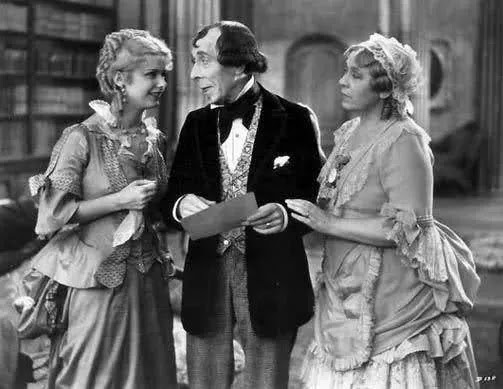
Disraeli (1929-30)


The film Disraeli depicts a key moment during the reign of Queen Victoria and Prime Minister Benjamin Disraeli. It has something to do with the purchase of the Suez Canal and ensuring British control of India in 1874. There are also Russian spies who are trying to find out what Disraeli and his government are doing, but to be frank, I’m not sure that any of this is all that interesting to a current audience. The film’s origins as a stage play are too obvious, and the quality of the print that I had access to was quite bad.

Today, Disraeli is perhaps best known for starring George Arliss, who became the first Best Actor Oscar winner to portray an actual person and the first British actor to win the honor. Since then, of course, neither of those is rare. Oscar voters have shown their preference for actors portraying real-life people, and British actors have certainly accumulated quite a lot of Oscar gold over the following decades. The rest of the cast of Disraeli is, comparatively, a bit amateurish, including Arliss’s own wife, Florence Arliss, playing Lady Beaconsfield, Disraeli’s wife. Oddly enough, she seems to be calling him Dizzy throughout the movie, or is she trying to say Dissy? I could never figure that out.

At the start of the film, Disraeli is already old and quite controversial. He’s denounced – to his face – by fellow politicians in the House of Commons and regularly spoken of in unfavorable terms in Hyde Park. He also has to deal with those Russian spies, one of whom he hires to be his personal secretary in order to keep tabs on the fellow and the other a very nosy woman who has access to the gossip of high society types. Disraeli pretends to be ill in order to get Mrs. Travers (Doris Lloyd) to reveal what she knows, and he’s able to turn the information around on her. That sequence might be the most entertaining in the entire film.

I don’t recall from my British history classes all of the fuss that the film makes about the Suez Canal’s importance to Great Britain and its empirical tendencies. It’s dismissed by one of the characters as being nothing more than an “Egyptian ditch.” Nowadays we understand the significance of such canals, but I’m not sure I ever fully understood from the film how securing the canal would give control of India to Great Britain and make Victoria the “Empress of India,” which seems to be Disraeli’s goal. Certainly, British expansionism was a key aspect of this period in their history, so the film is rather accurate in that respect, I suppose.

There’s a subplot involving Lord Charles Deeford (Anthony Bushell), a young and handsome and dull fellow, trying to woo Lady Clarissa Pevensey (Joan Bennett), who finds him just as boring as the viewers do. He’s certainly handsome, but he only becomes truly interesting when Disraeli dispatches him to help negotiate for British control of the canal. When he’s gone from the screen, she and we get a chance to forget how stuffy he is. His return, at least, guarantees success for Britain and a sense of how he might actually be smarter and more energetic and even useful than he initially appears.

I’m surprised – even though I probably shouldn’t be given when the film was made – that more wasn’t made of Disraeli’s Jewishness. Yes, the “old money” class of Britain certainly didn’t look favorably on him because he wasn’t “one of them,” but how much of their dislike of him might be attributed to antisemitism? The movie only mentions his Jewish identity a couple of times, and once is in connection to a Jewish banker who supposedly will help Disraeli secure the money to pay for the canal. Otherwise, the film remains rather silent on how the reactions to Disraeli might have been motivated by the feelings of British aristocracy to his ethnicity.

Like many stage productions that were adapted into films in the early years of “talkies,” Disraeli is really, truly quite talky (talkie?). Dialog takes clear priority over action, and the sets too often reveal the stage origins of the film. When you don’t have to change the sets as often, you could provide more furniture, for example, to represent better what Victorian homes and offices looked like. I mean, they weren’t known for this kind of rather comparatively austere minimalism.

The version of the film that I saw had a very hazy quality to its cinematography that I can’t quite determine where it was the result of deterioration or just how it was almost filmed originally. It almost looks out of focus at times. Some of the outdoor sequences are quite nice, but I didn’t understand the camera’s obsession with the swans and peacocks that populate the Disraeli home. The DVD (probably a bootleg copy) I watched was actually recorded from a Turner Classic Movies screening, so I’m wondering if we just don’t have access to a good print nowadays.

I’ve often said that you shouldn’t rely on a movie to provide historical accuracy. If you want what really happened, a book or a documentary might be more helpful than a fiction film. However, after watching Disraeli, I was left wondering if the actual events were truly this boring. If you need evidence that this is a fictional story, look at the Hollywood ending the film gives you. Disraeli’s wife is suddenly sick even though I don’t recall any sense that she’d been all that frail throughout the rest of the movie, but she makes an astonishing recovery just in time to join her husband to meet Queen Victoria at the film’s end.

Oscar Win: Best Actor (George Arliss)

Other Oscar Nominations: Best Picture and Best Writing